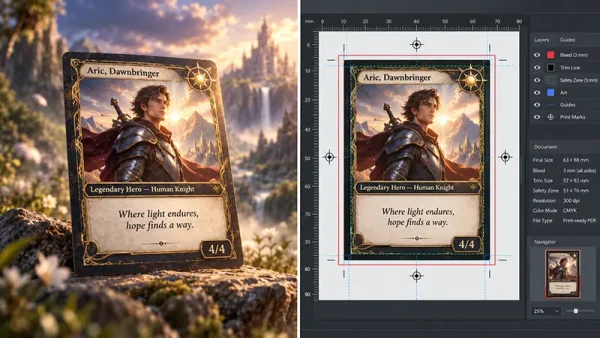
When creating custom game cards, one of the most exciting ways to enhance their visual appeal and tactile feel is by adding metallic elements. Two popular techniques for achieving this effect are foil stamping and metallic ink printing. Both options can transform a game card from a simple piece of paper into a luxurious, eye-catching artifact.
But which one is right for your custom card games? Let’s break down what each technique is, how they differ, and which one you should choose based on your needs.
What is Foil Stamping?
Foil stamping is a high-end printing technique where metallic or holographic foil is applied to the surface of the card using heat and pressure. Imagine a shiny, reflective material that’s precisely stamped onto your card’s surface, creating a bold contrast against the underlying design. Foil can be applied in a variety of finishes: gold, silver, holographic, and other colors, even matte versions.
The process itself begins with a die that is custom-made to the design you want to foil. The die is heated, and then a foil material (often a thin, metallic film) is placed between the die and your game card. Once the pressure is applied, the foil adheres to the areas that the die touches, leaving behind a crisp, metallic imprint.
The beauty of foil stamping lies in its luxurious, premium appearance. It’s commonly used for logos, borders, special cards (like rare or limited edition versions), or anywhere that needs to stand out. The foil catches the light beautifully, giving the card an almost “glowing” effect depending on the finish and lighting conditions.

What is Metallic Ink Printing?
Metallic ink printing is another way to bring shiny, metallic colors to your game cards, but it works in a different way. Instead of using heat and pressure to adhere foil to the card’s surface, metallic ink printing uses special ink that contains metal particles. The ink is printed directly onto the card using a regular printing press, much like traditional ink printing, but with the added sparkle and shine of the metallic particles.
Think of it like a shimmer added to the ink. While metallic ink doesn’t have the same bold, reflective finish as foil stamping, it still offers a subtle gleam that’s perfect for areas that don’t need the intense shine of foil. Metallic inks can come in colors like gold, silver, bronze, and even custom shades, allowing designers to play around with the hue and level of shimmer.
The key difference between metallic ink and foil is that metallic ink doesn’t create the same tactile feel. While foil stamping is a raised and textured effect that you can physically feel, metallic ink is smooth to the touch. It’s printed directly into the surface of the card, leaving no depth but still offering a lovely shine under the right lighting.

Foil Stamping vs. Metallic Ink: Key Differences
1. Appearance and Finish:
– Foil Stamping: Foil stamping produces a high-contrast, reflective finish that stands out with brilliant shine. The metallic material has a certain depth and dimension to it, and it catches the light from different angles, creating a dramatic effect.
– Metallic Ink Printing: Metallic ink provides a more subtle, soft gleam. It doesn’t have the bold, reflective qualities of foil but still gives the design a shimmering, smooth finish. The shine is much less pronounced and often more muted.
2. Feel and Texture:
– Foil Stamping: Foil stamping adds texture to your game cards. The raised foil creates a tactile experience, making the design feel more like a premium, collectible item. This can be especially noticeable when foil is used for logos, borders, or special illustrations.
– Metallic Ink Printing: Because metallic ink is printed on the card’s surface, it doesn’t create any raised texture. It’s a smooth, flat finish that feels like the rest of the printed areas on the card.
3. Durability:
– Foil Stamping: The foil layer is applied using heat and pressure, which means it adheres very well to the card. However, over time, with heavy handling or wear and tear, the foil may start to peel or scratch off. That said, if applied carefully, foil can be durable and long-lasting.
– Metallic Ink Printing: Metallic ink is more integrated with the paper or cardstock, so it doesn’t peel off or scratch as easily as foil. It is more durable in the long run, especially if the cards will see a lot of handling.
4. Cost and Production:
– Foil Stamping: Because foil stamping requires the creation of custom dies, the setup costs tend to be higher. It’s a more specialized process and may take more time for production, particularly for larger runs or intricate designs.
– Metallic Ink Printing: Printing with metallic ink is less expensive and easier to execute. It’s printed using standard presses, making it a more cost-effective choice for high-volume runs or projects on a budget.
5. Complexity and Customization:
– Foil Stamping: Foil stamping allows for high precision in design, especially for fine lines, logos, and intricate details. It can be used in combination with other printing techniques, like spot UV or embossing, to create a truly custom, multi-layered effect.
– Metallic Ink Printing: While metallic ink can be used to add shimmer to large areas, it’s less precise for detailed patterns or designs. However, it allows for smoother gradations of color, making it great for more expansive, abstract metallic finishes.

Which One Should You Choose for Your Custom Game Cards?
The choice between foil stamping and metallic ink printing largely depends on the look and feel you want for your game cards. Here are some considerations to help you decide:
1. For Premium, Limited Edition Cards:
If you’re designing cards for a premium, collector’s edition set or want to create a really striking visual impact, foil stamping is the way to go. It delivers that “wow factor” and elevates the overall quality of the game cards. The raised texture, dramatic shine, and luxurious feel make it a fantastic option for rare cards or for highlighting important elements like logos or special artwork.
2. For a Subtle, Elegant Look:
If you’re looking for a more refined, understated effect, metallic ink printing might be the better choice. It’s less in-your-face but still offers that hint of luxury and sophistication. Metallic ink works well for subtle highlights, borders, or backgrounds where you don’t want to overpower the rest of the design.
3. For Durability and Cost-Effectiveness:
If the game cards will be in heavy circulation (think frequent gameplay or high-volume production), metallic ink printing is probably the more practical option. It’s cost-effective, durable, and won’t wear down as easily as foil. On the other hand, if cost isn’t an issue and you’re willing to invest in the higher setup fees for foil, it can be a stunning choice for special cards.
4. For Complex Designs and Customization:
If your design includes detailed artwork that needs to be executed with fine lines or intricate details, foil stamping is a great choice. The process allows for sharper precision and finer detail. If the design calls for large, flowing metallic areas with a smooth texture, metallic ink can cover large areas more seamlessly.
Custom Game Cards Conclusion
In the battle of foil stamping vs. metallic ink, the best choice depends on the unique needs of your custom game cards. Foil stamping is the go-to option for high-end, premium finishes with a bold, reflective shine, while metallic ink offers a more understated, cost-effective solution with lasting durability.
Whether you choose foil for that high-impact elegance or metallic ink for its smooth sophistication, both techniques can add something special to your game cards. Choose wisely based on your budget, design goals, and the kind of impression you want to leave on your players. In the end, the right metallic touch with Acelion will take your cards from ordinary to extraordinary.