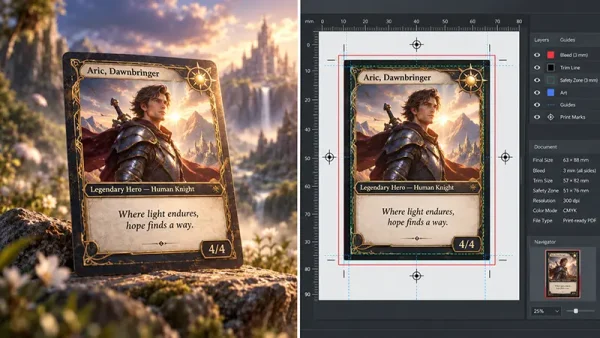
Designing a card game for visually impaired people requires careful consideration of various factors to ensure that the game is accessible, enjoyable, and inclusive.
This article will guide you through the essential criteria for designing such an inclusive card game, from understanding the specific needs of visually impaired players to choosing the right card sizes, indexes, and colors. We’ll also explore product examples that successfully cater to this demographic.
Understanding the Needs of Visually Impaired People
Visually impaired individuals face unique challenges when it comes to playing card games. The primary issue is being able to read the cards in hand. Players must be able to identify card values (from 1 to King) without confusion to organize them effectively and play strategically. Recognizing the suits (spades, hearts, clubs, or diamonds) is equally important. Additionally, visually impaired players need to follow the game’s progress, which means clearly identifying the cards placed by other players on the table.
To ensure that visually impaired individuals can continue to enjoy card games, it’s crucial to focus on three main areas: the size of the cards, the design of the cards, and the clarity of the indexes. These elements will allow players with visual impairments to participate fully in the game.
Criteria for Designing a Card Game for Visually Impaired People
1. Playing Card Sizes for Vision Problems
The first consideration when designing a card game for visually impaired players is the size of the cards. Standard playing cards typically measure 5.8 cm x 9 cm, but this size can be challenging for those with vision impairments. Opting for larger cards can make a significant difference. Larger cards allow for bigger indexes (numbers and symbols), making it easier to read the cards in hand and see the cards played by others.
However, it’s important not to make the cards too large, as oversized cards can be difficult to handle, especially for elderly players or those with dexterity issues. The key is to find a balance between visibility and manageability. For example, the large-size cards and large indexes from Agoralude Editions are designed specifically to cater to these needs, offering better visibility without sacrificing ease of use.
2. Index Size Adapted to Vision Problems
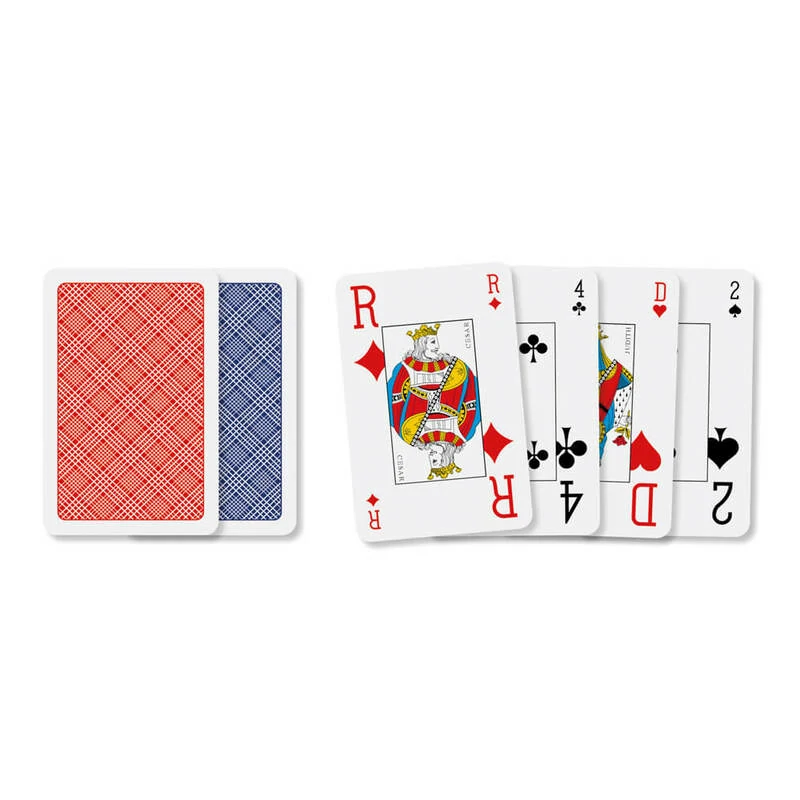
Indexes are the symbols and numbers placed at the corners of the cards to indicate their value and suit. The size of these indexes is crucial for visually impaired players. The larger the indexes, the easier it is to identify the cards. On standard cards, indexes typically measure between 6 and 7 mm. However, for visually impaired individuals, indexes can measure up to 20 mm, significantly enhancing their visibility.
Beyond the height of the indexes, the thickness of the numbers and symbols also plays a role in making the cards easier to read, especially when placed on the table. While some standard-sized cards have indexes up to 14 mm, larger cards generally offer the largest indexes, making them more suitable for visually impaired players.
Additionally, left-handed players, whether visually impaired or not, will benefit from cards with large indexes on all four corners (instead of just two). Left-handed players typically unfold their deck from right to left, making it easier for them to read indexes placed in the top right corner of the cards.
3. French vs. International Indexes
Another important consideration is whether to use French or international indexes. The ease of reading face cards (jacks, queens, and kings) can vary depending on the type of card game. In French index cards, the king is symbolized by the letter ‘R,’ the queen by ‘D,’ and the jack by ‘V.’ In international index cards, the king is represented by ‘K’ (for King), the queen by ‘Q’ (for Queen), and the jack by ‘J’ (for Jack).
French indexes are generally more familiar to visually impaired players, making them easier to recognize. Additionally, the designs of the face cards in French playing cards are classic representations, which can be identified more quickly, especially when the cards are played in the center of the table.

4. Contrasting Colors
Color contrast is another vital factor when designing cards for visually impaired players. The indexes on cards are usually in red or black, but these colors can vary in intensity. Cards with strong contrasts, such as deep black and bright red on a white background, are more visible to players with vision impairments. The Large Size and Large Index Playing Cards Game, for example, has been specifically designed with high contrast in mind, making it easier for visually impaired individuals to differentiate between the suits and values of the cards.
Product Examples for Visually Impaired Players
Several card games and decks have been developed with the needs of visually impaired players in mind. Here are a few examples that can serve as references when designing your own card game:
1. Bicycle Large Print Playing Cards: These cards feature oversized indexes and a simple, uncluttered design that makes them easier to read. The high contrast between the black and red indexes and the white background enhances visibility, making them a popular choice for visually impaired players.
2. Piatnik Super Jumbo Playing Cards: These cards are larger than standard cards, with extra-large indexes that are easy to read. The Piatnik Super Jumbo deck is a great option for those who need a combination of larger cards and highly visible symbols.
3. Hoyle Super Jumbo Playing Cards: Similar to the Piatnik deck, Hoyle’s Super Jumbo cards feature large indexes and a simple, easy-to-read design. These cards are also designed with durability in mind, ensuring they last through many games.
4. Braille Playing Cards: For players who are blind or have severe vision impairments, Braille playing cards are an excellent option. These cards have raised Braille characters that correspond to the traditional symbols and numbers, allowing players to feel the values and suits with their fingertips.

Inclusive Card Games Conclusion
Designing a card game for visually impaired people involves more than just enlarging the cards or increasing the size of the indexes. It requires a thoughtful approach to ensure that all aspects of the game are accessible and enjoyable for everyone.
By focusing on larger card sizes, easily readable indexes, familiar designs, and high-contrast colors, you can create a card game that brings joy and social interaction to visually impaired individuals. Referring to existing products like Bicycle Large Print Playing Cards, Piatnik Super Jumbo Playing Cards, Hoyle Super Jumbo Playing Cards, and Braille Playing Cards can provide valuable insights into what works best for this audience.
Have a great idea? Talk to Acelion!