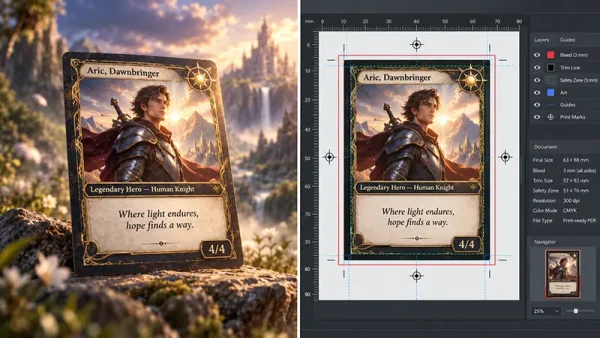
Author’s Note by Alex Deng, Production Manager: Over the past 12 years on the production floor, I’ve watched more orders go wrong after the sample approval than before it. A perfect prototype tells you almost nothing about deck #4,832 in a rushed 20,000-unit run — that gap is where most buyers get burned, and it’s rarely the printing press that fails them. This guide walks through exactly what separates a factory that can scale your order from one that can only produce a good sample. Here is what you need to know before you commit to your next production run.
Most sourcing guides tell you to check for ISO certification and ask for a sample.
Neither of those steps will tell you whether a factory can hold tolerance across a 20,000-deck production run.
Here is the truth: This guide is built from the checkpoints that actually separate a manufacturer who can scale your order from one who can only produce a good-looking prototype.

Factory-Direct Manufacturer vs. Trading Company: How Do You Tell Who Actually Controls Your Production?
A polished WeChat catalog or Alibaba storefront tells you nothing about who is running the presses.
In the playing card space specifically, a large share of “manufacturers” listed online are intermediaries who subcontract to two or three actual converting plants.
But here’s the catch: That means your specs get diluted by a middleman who cannot answer engineering questions — and by the time you find out, your deposit is already gone.
Business License Scope vs. Sales Presentation: What Documentation Actually Proves Manufacturing Status?
Request the company’s official business license and check the registered business scope field.
- A genuine manufacturer’s scope will explicitly list production-related terms such as “Printing,” “Manufacturing,” or “Processing”
- A trading company’s scope will typically show only generic terms like “Trading” or “Sales”
- Cross-reference the registered factory address against the address shown in any video walkthrough
A mismatch here is the single most common red flag in this category.
Why it matters to your project: This one document check takes five minutes and can save you months of quality disputes with a supplier who never actually controlled your production line.
Live Video Factory Walkthrough vs. Photo Samples: Which Verification Method Actually Reduces Risk?
Photos can be sourced from any factory’s marketing deck, including one the supplier has never worked with.
A live, unscripted video call — where you can ask the operator to walk to a specific press or converting line on request — is far harder to fake.
Ask specifically to see:
- The die-cutting station
- The card sorting/inspection line
These are the two areas an intermediary is least likely to have access to.
Why it matters to your project: A 15-minute video call before you sign a PO is the cheapest insurance policy you’ll ever buy on a bulk order.
Direct Engineering Contact vs. Sales-Only Communication: Why This Distinction Predicts Reliability?
If every technical question — tolerance specs, coating options, turnaround on a 15,000-unit order — gets routed back through a sales rep with a delayed, vague answer, you are very likely dealing with a broker.
A production-side manufacturer will typically be able to loop in an engineer or production manager directly, even if that person’s English is limited.
Insider Note: I’ve seen buyers get burned not on the first order, but on the reorder. A trading company quotes you a great price, delivers an acceptable first batch, and everything looks fine — until your reorder six months later comes back with a slightly different card stock feel or a shifted color tone. What happened is the broker moved your job to a different subcontracted factory because the original plant was booked or raised its price. You have no contractual recourse for this because you never had a direct relationship with the actual production line in the first place. If consistency across multiple orders matters to your brand, get the factory’s name and address written into your purchase agreement, not just the trading company’s name.
Key Takeaways
- The difference between a manufacturer and a trading company isn’t sales polish — it’s a specific document most buyers never think to request.
- Photo samples can be sourced from any factory; only one verification method actually confirms who controls your production line.
- There’s a single communication pattern that reliably separates real manufacturers from resellers, and it has nothing to do with how fast they respond.

On-site Factory Audit
In-House Converting Process vs. Outsourced Finishing — Why This Hidden Step Determines Card Quality at Scale
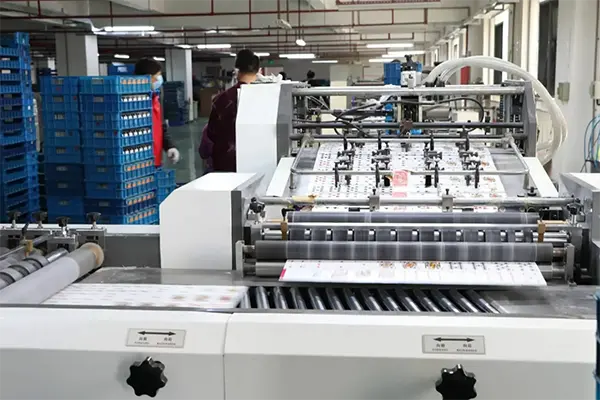
Printing is the step buyers scrutinize most.
It’s also the step least likely to cause defects at scale.
What does this mean for your deck? The actual failure point in bulk playing card orders is almost always downstream of the press — in die-cutting, sheet conditioning, and inspection. This is the section most competitor content skips entirely, and it’s where you should spend most of your due diligence time.
Die-Cutting Tolerance vs. “Precision Cutting” Claims: What Specification (in mm) Should You Request?

“Precision cutting” is a marketing phrase, not a spec.
Ask the supplier for their documented die-cutting tolerance in millimeters.
- A reliable converting line should hold to roughly ±0.15mm–0.3mm on card edge trim
- Tighter tolerances are typically reserved for premium or casino-grade runs
- Anything described only in qualitative terms (“very accurate,” “high precision”) without a number attached should be treated as unverifiable
If your card back design uses a border or frame element rather than a full-bleed pattern, this tolerance matters even more: a narrow border is far more likely to visually expose any die-cutting drift.
Why it matters to your project: A shift of even a fraction of a millimeter is invisible on a single sample card — but multiply that across 10,000 decks stacked in a retail display, and it’s the difference between “premium product” and “return request.”
As a design safeguard, keep any bordered card back design at a minimum border thickness of 3mm, or specify a full-bleed, borderless back design to eliminate the visual risk of trim shift entirely.
In-House Humidity Conditioning vs. Outsourced Finishing: How Do You Verify Which Steps a Supplier Actually Owns?
Paper stock needs to be conditioned to a stable moisture content before lamination and die-cutting, or you get warping and inconsistent card snap.
Ask directly whether the humidity conditioning room is owned and operated in-house, or whether raw sheets are trucked to a third-party finisher between printing and converting.
Here is the truth: Every additional handoff between vendors introduces a batch-consistency risk that has nothing to do with the printing press itself and everything to do with logistics.

A relevant technical note for security-sensitive orders:
- If your project requires cards that resist light transmission (a standard requirement for casino, club, or any tournament-grade deck)
- The core paper itself needs to be specified as black-core or blue-core stock
- Not a standard white-core sheet with an opaque coating layer applied afterward
- This needs to be confirmed at the paper-sourcing stage, not assumed as a lamination outcome
Why it matters to your project: Getting this wrong doesn’t show up until a customer holds your deck up to a bright light — at which point it’s a brand reputation problem, not just a manufacturing detail.

Automated Card Inspection vs. Manual Sorting: Which Defect-Detection Method Should You Require for Bulk Orders?
Manual sorting relies on human attention holding steady across thousands of repetitive units.
It doesn’t — especially on night shifts or rush orders.
Ask whether the supplier runs:
- An automated optical inspection line for defect detection (registration drift, ink spots, edge chips)
- Or relies on visual spot-checks by line workers
Request short video footage of the inspection line in operation, not just a still photo of the equipment.
Factory Note: The trap I see most often is buyers who condition their approval sample properly — because it’s a small, unhurried batch — and then rush the actual production run to hit a shipping deadline. Paper conditioning isn’t optional at scale; it takes real time in the climate room, and if a factory skips or shortens that step to save two or three days on a tight schedule, you’ll see it as slightly wavy edges or cards that don’t stack flush after they’ve been out of the shrink-wrap for a week. Always ask what the conditioning time is for your specific order volume, not just what it was for your sample.
Key Takeaways
- Printing quality and card quality are not the same thing — most defects trace back to a step almost no buyer thinks to ask about.
- Not all “precision cutting” claims are equal — the real difference lies in a specific, verifiable measurement most suppliers won’t volunteer.
- Whether a supplier owns this one production step in-house predicts batch consistency more reliably than any equipment brand or factory size.
[“Compare our linen finish vs. smooth finish card stock options” → Card Stock & Finishing Options page]

Sample Quality vs. Mass Production Consistency: How Do You Avoid the “5,000-Deck Surprise”?
An approved sample proves the supplier can produce one good deck under ideal, unhurried conditions.
It says almost nothing about deck #4,832 in a rushed production run.
But here’s the catch: The gap between sample and mass production is where most bulk buyers get burned, and it is almost entirely preventable with the right pre-production requests.
Color Tolerance (ΔE) vs. Visual Approximation: How Do You Set an Objective Acceptance Standard Before Production?
“The color looks the same” is not a standard — it’s an opinion, and it changes depending on lighting and screen calibration.
Request an objective color tolerance measured in Delta E (ΔE) units:
- A commercial acceptance target is typically ΔE ≤ 3
- Tightening to ΔE ≤ 2 for critical brand elements like logos or spot colors
- Confirmed against a physical proof, not a digital file preview
Why it matters to your project: A brand logo that’s slightly “off” won’t fail a single-card inspection — but it will fail a shelf comparison next to your last production run, and customers notice inconsistency faster than you’d expect.
One technical caveat worth raising at this stage:
If your card back or box design includes large areas of dark color or solid black, flag this early.
A four-color-process pure black built from 100% CMYK across all channels drives total ink coverage well past a safe threshold, causing drying and rub-off problems on press, especially at speed.
Specify a rich black build with total area coverage (TAC) kept at or below 300%, rather than a flat CMYK 100/100/100/100 black.

Batch-by-Batch QC Reports vs. One-Time Sample Approval: What Should Your Contract Require?
A single approved sample creates a false sense of security.
Your purchase agreement should specify per-batch QC reporting:
- Documented checks at defined intervals throughout the run
- Not just a pre-production sample sign-off
- Confirmation of whether the report includes actual measured values (thickness, color readings) or just a checkbox confirmation
All print files submitted for production should also be locked to CMYK color mode with a minimum 3mm (0.125″) bleed on every edge.
Why it matters to your project: This spec sounds basic, but it’s a frequent source of last-minute file rejection or unplanned re-registration delays — the kind of delay that pushes your shipment past a trade show or launch date.
Defect Rate by Order Size vs. Flat “Quality Guaranteed” Claims: What Numbers Should You Ask For?
“Quality guaranteed” is not a number.
Ask the supplier for their historical defect rate broken down by order volume:
- Credible suppliers cite an approximate percentage, typically in the 1%–3% range for standard bulk orders
- Top-tier converters achieve under 1% on well-controlled runs
- Also confirm their reprint or rework policy in writing — what happens, contractually, if a batch exceeds the agreed defect threshold
Factory Note: Here’s something most buyers never think to check — ask whether your approval sample was cut on the actual production die, or on a separate sample-room cutter (sometimes even a laser cutter for speed). A sample cut on a different tool can look perfect while telling you nothing about how the real production die will perform at volume, especially once the blade has a few thousand strikes on it and starts to wear. If tolerance really matters for your project, ask for the sample to be cut on the same die that will run your production order.
Key Takeaways
- A flawless sample deck predicts almost nothing about your 5,000-unit production run — the real risk shows up in a number most buyers never request.
- “Color consistency” is a subjective claim unless it’s backed by one specific type of measurement most quotes leave out.
- The single contract clause that protects you from batch inconsistency is rarely included unless you ask for it directly.

ISO 9001/FSC Certification vs. Hands-On Product Evaluation: What Do These Documents Actually Guarantee?
What ISO 9001 Certifies vs. What It Cannot Tell You About Shuffle Feel or Edge Precision
ISO 9001 certifies that a factory has a documented, auditable quality management system in place — meaning processes are written down and followed consistently.
It does not test or certify:
- Shuffle feel
- Card snap
- Edge smoothness
- Coating durability
A factory can be fully ISO 9001 certified and still produce a deck that feels stiff or catches at the corners; the certificate covers process discipline, not tactile product outcome.
Why it matters to your project: Don’t let a certification badge substitute for actually shuffling the product in your hands before you commit to a 10,000-unit order.
FSC Chain-of-Custody vs. Material Traceability: How Do You Confirm Sourcing Claims Beyond the Certificate?
FSC chain-of-custody certification confirms that wood-fiber-based paper in your order can be traced back through a certified supply chain.
It does not evaluate the finished card’s print quality, coating, or converting precision.
If sustainable sourcing is a requirement for your brand, ask for the FSC certificate number and verify it independently against the FSC public database, rather than accepting a printed logo on a quote sheet at face value.
Insider Note: One thing worth checking that catches even experienced buyers off guard: the ISO or FSC certificate a supplier sends you may legally belong to the parent holding company or group headquarters, not the specific production facility that will actually run your job. This is common when a group operates multiple plants under one corporate registration. The certificate isn’t fake, but it may not apply to the physical location producing your cards. Ask which factory address is covered under the certificate scope, and match it against the address from your video walkthrough.
Key Takeaways
- ISO 9001 certifies a documented management system — it does not certify shuffle feel, edge precision, or coating durability.
- FSC certification confirms traceable sourcing, but does not guarantee finished-product quality.
- Treat certifications as a minimum entry requirement, not proof of manufacturing excellence.
- Combine certification checks with a physical product evaluation before placing a bulk order.
Casino-Grade & ASTM-Compliant Cards vs. Standard Retail Decks: Which Specification Does Your Project Actually Require?
Casino, club, and tournament-grade card orders carry compliance requirements that standard retail or promotional decks do not.
Here is the truth: Treating this as “the same product, just thicker card stock” is the most common and most costly assumption in this category.
ASTM D7889 Compliance vs. Generic “Durable Card Stock” Claims: How Do You Verify Compliance Documentation?
ASTM D7889 governs performance testing for playing cards used in gaming/casino contexts, covering attributes like durability and marking resistance.
“Durable card stock” on a quote sheet is not evidence of compliance.
Request the specific compliance test report or certificate referencing the standard, not a generic durability claim, and confirm the report was issued for the exact paper/lamination combination you’re ordering — not a different product line from the same factory.
As with any security-sensitive deck, confirm the core paper is specified as black-core or blue-core stock for light-blockage/anti-marking purposes, since this is typically a baseline expectation for casino-grade compliance rather than an optional upgrade.
Why it matters to your project: A compliance failure here isn’t a cosmetic issue — it can get your deck rejected from a licensed gaming venue entirely, after you’ve already paid for full production.
Instant Flat-Rate Quotes vs. Specification-Based Pricing: Why Is a Fast Quote Often a Red Flag?
A supplier who returns a firm price within minutes, before asking about card size, coating, core type, or compliance requirements, has priced your project on assumptions — not your actual specs.
What does this mean for your deck? This is especially risky for casino-grade or ASTM-compliant orders, where paper core and lamination requirements meaningfully change production cost.
Before accepting any quote for a compliance-sensitive order, request three specific figures in writing:
- The die-cutting tolerance
- The documented reject/defect rate for this product line
- The specific compliance certificate referenced above
A supplier unwilling or unable to provide these three numbers is signaling that the quote was generated from a price list, not from your specification sheet.
Factory Note: Black-core and blue-core stock don’t behave like standard white-core paper on the line, and this trips up factories that mostly run retail decks. The core layer changes how the sheet absorbs adhesive during lamination, and if the lamination pressure and dwell time aren’t adjusted for it, you get a higher scrap rate from delamination at the edges — which is exactly the failure point ASTM testing checks for. If a factory quotes you casino-grade black-core cards at the same price and turnaround as their standard linen-finish deck, that’s usually a sign they haven’t actually run this core paper before.
Key Takeaways
- Casino-grade and standard retail decks require fundamentally different material specs — most suppliers won’t clarify this unless you ask.
- An instant flat-rate quote often signals something about how the supplier priced your project, and it’s rarely good news.
- There are three specific numbers worth requesting before accepting any quote for a compliance-sensitive order.
Frequently Asked Questions
Are playing cards made in China lower quality than USPCC-made decks? Not inherently. Quality depends on whether the specific factory controls die-cutting, conditioning, and inspection in-house — the same variables that determine quality anywhere in the world, not the country of manufacture itself.
What is a reasonable MOQ for custom playing card printing in China? MOQs commonly range from 500 to 1,000 decks for standard finishes, though casino-grade or highly customized specs (special core paper, custom foiling) often carry higher minimums due to setup costs.
How long does bulk playing card production typically take from PO to shipment? Standard bulk orders typically run 4–6 weeks from PO to shipment, excluding ocean freight transit time, depending on order complexity and whether custom tooling (new dies) needs to be produced first.
Can a manufacturer support both linen finish and casino-grade specifications in the same order? A single manufacturer with in-house converting capability can typically support both, provided the core paper and finishing line are specified separately for each product within the order — this should be confirmed at the quoting stage, not assumed.
Key Takeaways
- Chinese-made playing cards can match or exceed USPCC-level quality, provided the converting process is verified in-house.
- Reasonable MOQs for custom playing card printing typically start in the low hundreds to high hundreds of decks, depending on finish and packaging.
- Bulk production timelines from PO to shipment generally range from four to six weeks, excluding shipping transit, depending on order complexity.
- A single manufacturer can support both linen finish and casino-grade specifications within the same production run.