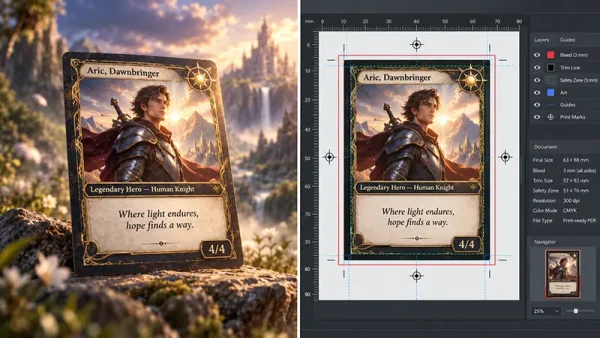
Illustrator for Your Custom Card Game is not just a service you hire—it is the bridge between your creative concept and the emotional connection your players will feel when holding your cards for the first time. Whether you’re producing a collectible trading game, a party card deck, an educational tool, or a branded corporate set, the illustration defines the mood, communicates the rules visually, and makes your project look professional.
Illustrations are never merely decorative. They create atmosphere, reinforce brand identity, and capture the imagination of your audience. In fact, the right illustrator can make the difference between a deck that feels generic and one that becomes a cherished keepsake. Since custom card games vary widely—from whimsical family sets to strategic board game expansions—the illustration requirements also shift dramatically. Selecting the right professional becomes a crucial early decision.
And here’s where expertise counts. As a printing partner who has worked with countless clients, I can assure you: the illustrator you choose is not just providing pictures. They are delivering the first impression of your project, the emotional anchor of your theme, and the commercial viability of your card game.
Illustrator for Your Custom Card Game Table of Contents
Define Your Needs: Clarifying Style and Goals
Game Type and Its Impact on Illustration
Before you even begin searching for an illustrator for your custom card game, you must understand the category of game you’re creating. A strategic war game calls for bold, intricate visuals that emphasize realism and tension. A party deck thrives on colorful, humorous, and approachable artwork. Educational cards for children require clarity, simplicity, and age-appropriate charm. Brand or corporate decks demand professional visuals that align with existing corporate identity guidelines.
Audience and Visual Resonance
To find an illustrator for your custom card game, knowing your audience is essential. Children respond best to bold colors and exaggerated characters. Families appreciate cheerful, accessible artwork. Collectors are drawn to depth, detail, and sometimes even dark or avant-garde styles. Corporate clients expect polished and consistent design, often aligning with logos, mascots, or campaign themes. The chosen illustrator must be able to adapt their skillset to match your intended users.
Style Considerations
Illustration comes in countless styles: realistic, cartoonish, minimalist, vintage, fantastical, abstract. An illustrator for your custom card game should master the one you envision. But here lies a subtle point: sometimes clients know the style they like but struggle to describe it. In that case, reference images, inspiration boards, and existing artworks can become invaluable communication tools.
Card Structure and Elements
Illustration for card games is not only about full artworks. Sometimes you need borders, symbols, icons, backgrounds, or recurring motifs. A good illustrator is versatile enough to provide both detailed character scenes and clean UI-friendly icons.
Consistency or Variety
One decision is whether to employ a single illustrator to maintain cohesion or multiple illustrators for diversity. A single hand ensures uniformity, which is vital for professional decks. On the other hand, a project like an art collaboration deck thrives on multiple styles. Either choice must be intentional.

Where to Find the Right Illustrator for Your Custom Card Game
Freelance Platforms
Freelance sites make it easy to locate a wide pool of artists with diverse price ranges. If budget is your key factor, you can quickly compare portfolios and communication styles. Just remember: the lowest cost rarely provides the best long-term quality.
Art Communities
Dedicated communities, especially those built around digital art, are excellent sources of high-level talent. Browsing portfolios here allows you to assess depth, versatility, and commitment to polished work. These platforms often showcase the finest professional illustrators who already specialize in fantasy, sci-fi, cartoon, or corporate art.
Social Media Discovery
Social platforms like Instagram or Twitter have turned into real-time galleries. An emerging illustrator for your custom card game may already be posting exactly the type of style you want. Following hashtags, interacting with artists, and engaging in direct communication can uncover unique opportunities.
Professional Design Studios
Some studios maintain a roster of illustrators trained specifically in gaming and printed card production. While sometimes pricier, they deliver tried-and-true expertise, ensuring that your art translates seamlessly into print-ready files.
Educational and Brand-Focused Illustrators
Do not overlook illustrators who specialize in children’s books, educational content, or marketing visuals. Their ability to simplify complex ideas or represent abstract branding messages can be invaluable for educational or corporate card projects.
Exhibitions and Community Events
Game conventions, independent design festivals, and online forums are treasure troves for discovering talent. Meeting illustrators in person—or at least interacting live—provides a level of trust and rapport that browsing online portfolios cannot match.

How to Choose the Best Illustrator for Your Custom Card Game
Match of Style
The first and foremost factor is style compatibility. An illustrator for your custom card game must be able to embody the core mood you envision. If your game is mysterious and gothic, a lighthearted cartoonist is not the right fit, no matter how skilled.
Budget Considerations
Your budget sets the boundaries. A student illustrator may cost less but deliver uneven results. A seasoned professional will charge more, but the investment often saves you countless hours of revisions. Always weigh long-term value over short-term cost.
Experience and Case Studies
Experience in game illustration specifically is a strong advantage. It means the artist understands that cards must be clear at small sizes, consistent across multiple designs, and print-ready. If they have prior card or board game projects, that is a huge plus.
Portfolio Review
When you review portfolios, don’t just look at the obvious showcase pieces. Examine versatility: can this person design characters, icons, landscapes, and user-friendly layouts? Can they adjust tone depending on the target group?
Communication and Professionalism
An underrated factor: does this illustrator respond promptly, understand instructions, and handle revisions professionally? Projects can fall apart without effective communication, regardless of artistic ability.
Trial Tasks
Consider commissioning one or two sample cards before committing to a full deck. This test not only checks style compatibility but also reveals working pace, ability to follow directions, and receptiveness to constructive feedback.

How to Work Effectively with Your Illustrator
Clear Design Brief
Provide a detailed brief. Define target audience, color schemes, inspirations, technical requirements, and examples of what you love and dislike. A strong brief empowers an illustrator for your custom card game to deliver aligned results quickly.
Phased Delivery
Break the project into phases: rough sketches, color drafts, final illustrations. This approach allows you to catch mismatches early without costly rework.
Rights and Usage
Establish rights upfront. Will you own the art fully? Do you need rights for reprints, merchandise, or promotional materials? Make sure your illustrator understands your expectations and agrees in writing.
Timeline and Milestones
Deadlines matter. A well-structured timeline with milestones keeps your project moving. Factor in buffer time for feedback and revisions.
Constructive Feedback
When providing notes, balance clarity with respect. Don’t just say “I don’t like it.” Instead, specify what feels off and propose directions for adjustment. Artists value constructive guidance.
File Preparation for Printing
This is an area where many projects stumble. Print-ready illustrations should be in CMYK, 300dpi, with proper bleed and safe zones. File formats should match your printer’s requirements (often TIFF, PSD, AI, or layered PDF). A seasoned illustrator for your custom card game should be able to deliver in the correct format without issue.

Conclusion: Illustrator for Your Custom Card Game
At the end of the day, illustration is not a side detail. It is the soul of your deck, the visual identity of your story, and the element that makes players pause, admire, and engage. Finding the right illustrator for your custom card game is not simply outsourcing—it is choosing a creative partner who will walk with you from concept to finished product.
The perfect balance of creativity, professionalism, and execution brings your idea to life. A successful custom card game is the result of three forces working together: imagination, illustration, and production. With the right collaboration, your deck will not just be printed; it will resonate with every player who shuffles and draws.
And if you are ready to take your concept to print, remember: a trusted production partner makes all the difference. At Acelion Game, we specialize in guiding creators like you through the entire journey, from artwork preparation to premium printing. Reach out today, and let’s turn your vision into a card game that people will love, collect, and remember.
Illustrator For Your Custom Card Game FAQs
1. How much time does it usually take to complete card game illustrations?
The timeline depends on the number of cards, the complexity of designs, and the illustrator’s workload. On average, a small project may take a few weeks, while larger decks can require several months of consistent collaboration.
2. Do illustrators provide layered files for future edits?
Many professional artists deliver layered files if requested, which allows for minor adjustments later. However, this should always be clarified in the contract, as some illustrators charge extra for editable source files.
3. What are common mistakes creators make when hiring an illustrator?
A frequent mistake is not providing a clear brief, resulting in mismatched expectations. Others include rushing the selection process, ignoring licensing terms, and underestimating the budget needed for professional work.
4. Can multiple illustrators work on the same card game without losing consistency?
Yes, but it requires strong art direction and guidelines. When multiple artists are involved, a lead designer should ensure that style, color palettes, and layout remain uniform so the deck looks cohesive rather than disjointed.
5. How does illustration quality influence the overall market value of a card game?
High-quality artwork enhances perceived value, making the game more collectible and appealing. It often determines whether players view the product as premium or amateur, directly affecting sales and long-term brand recognition.