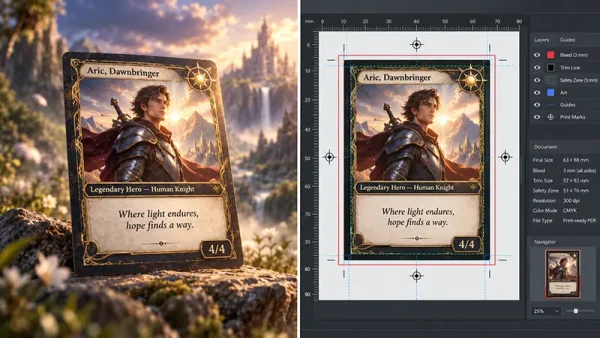
Calling all aspiring card game designers! Ever dreamed of seeing your creation on store shelves? While giants like Magic and Pokémon dominate the trading card game (TCG) scene with frequent expansions and booster packs, that model might not be realistic for smaller developers.
Here at Acelion, we’ve helped countless independent creators turn their custom game cards ideas into reality. This guide will walk you through the exciting journey, from initial concept to polished prototype and finally, a finished product ready to hit the market.
Step 1: Design Winning Custom Game Cards

Every great game starts with a spark – an idea that ignites your imagination. Here, we’ll explore ways to brainstorm and develop innovative concepts for your card game.
Every great game starts with a spark – an idea that ignites your imagination. Here, we’ll explore ways to brainstorm and develop innovative concepts for your card game.
Method 1: Remix a Favorite
Take a well-loved card game and give it a fresh spin! This allows you to analyze existing mechanics and see how they work. Try removing elements to understand their purpose. This can lead to creative twists on familiar gameplay.
Method 2: Theme It Up!
Does a particular theme from the real world fascinate you? Mythology, history, or even your favorite movie genre can be the foundation for your game! Building around a theme creates a clear direction for player interaction and world-building.
Examples in Custom Game Cards Action
* Undertale: Inspired by classic RPGs, Undertale lets players choose non-violent paths, creating unique storylines and defying expectations.
* Minecraft: This game blends sandbox exploration with survival mechanics, letting players create and thrive in an open world.
Beyond the Real World:
Don’t limit yourself! Movies, books, and other media can be treasure troves of inspiration. Consider adapting elements like actors, genres, or even film production stages into your card game mechanics. Since most people have some understanding of these concepts, your game’s core ideas will be more readily grasped by players.
Step 2: Determine a Target Audience

Research reveals a surprising truth: classic card games like poker hold broad appeal across ages and genders. However, to truly succeed, you need to delve deeper.
While age and gender are starting points, consider user behavior and interests. What drives your target audience to play games? What kind of experience are they seeking?
Many card game players seek casual entertainment, a way to unwind and pass the time. This often translates to a preference for games that are easy to learn and pick up quickly.
By pinpointing your target audience’s interests and behaviors, you can tailor your game to their desires. This not only enhances the overall experience but also helps you attract more players and build a dedicated following.
Step 3: Build the Rules and Player Strategy

With your theme solidified, it’s time to define the heart of your game: the mechanics and rules.
Brainstorming Blitz:
Get those creative juices flowing! Jot down every single idea that pops into your head. Don’t worry about refinement at this stage – capture everything! Even a rough concept can be interpreted differently by different people, and that’s okay.
Deep Dive:
Now comes the exploration phase. Delve into each idea, considering every intriguing aspect. What is the core purpose of your game? How will players interact with it? The goal is to achieve a comprehensive understanding of both your game’s “what” and “how.”
Why Behind the What:
As you brainstorm, write down not just the ideas but also the reasoning behind them. Thinking about the “why” will help you refine your game and ensure each element serves a clear purpose.
Multiple Paths to Victory:
Don’t get stuck on a single approach! Consider alternative concepts and variations on your original ideas. Having a toolbox of potential solutions allows you to adapt and overcome challenges later in the design process.
The Mechanics Matter:
As you develop the game’s core mechanics, constantly ask yourself critical questions. This will help identify potential oversights and keep your design moving in the right direction. Remember, the mechanics are the engine that drives your game, so don’t be afraid to tinker and refine!
Step 4: Content Creation and Streamlining

Now that you grasp the core mechanics, it’s time to bring your card game to life! The complexity of this stage hinges on the type of game you’re crafting.
Balancing the Abstract:
For strategy games like chess, this phase is relatively simple. The focus lies on refining rules and ensuring balanced gameplay between the pieces.
Content-Rich Worlds:
For games brimming with content, like those based on movies, expect to invest significant time in defining the elements that bring your world to life.
Streamlining for Success:
Here are some key strategies to streamline development:
* Interaction Inventory: Create a comprehensive list of all potential player interactions during gameplay. This ensures you don’t miss any crucial moments and helps maintain a balanced and diverse experience.
* Tracking Interactions: Monitor how often each interaction type appears. This helps ensure a healthy mix of mechanics throughout the game.
* Clear Card Design: Establish clear rules for generating character statistics and card functionality early on. This promotes consistency and allows for easier integration of new design team members.
Embrace Iteration:
Be prepared for some initial ideas to fall by the wayside. This is a natural part of the creative process. Don’t be discouraged! Store these unused concepts – they might spark inspiration later or find a place in future iterations of your game.
Step 5: Playtesting and Polishing

With content locked in, it’s time to bring your game to life with a playable prototype! Don’t worry about creating a masterpiece just yet. While stunning visuals enhance the experience, focusing heavily on aesthetics early on can be a pitfall if major changes are needed after playtesting.
Clarity is Key:
While the final design won’t be set in stone, prioritize readability and layout. Players need clear information to strategize effectively.
* Deck Distinction: If your game uses multiple decks, ensure each card is easily identifiable by deck. During prototyping, use different colored paper for each deck. The final product will have distinct, well-crafted designs on each card or piece type.
* Adaptable Tools: Use tools that allow for easy adjustments. Draw maps on whiteboards or use printable ones where you can add territory lines later. Experiment with separate paper pieces for countries until you find the optimal setup.
Refine and Iterate:
After incorporating playtest feedback, it’s time for “Prototype 2.0” (or as many as needed!). Here’s where the visual polish comes in:
* Crafting Your Cards: Design each card, either digitally or by hand.
* Building Your Brand: Create a logo that captures your game’s essence. Consistent visuals across the game and packaging are crucial. Develop a brand guideline document for future reference, especially if you plan expansions.
Needing Artistic Help?
No worries if you’re not artistically inclined! Many platforms like Freelancer, Fiverr, Upwork, and Behance connect you with talented graphic artists who can bring your vision to life.
By approaching prototype design with clarity and flexibility, you’ll be well on your way to a visually appealing and polished game that captivates players and embodies your brand.
Step 6: Playtesting – The Crucible of Fun

Your prototype is complete – time for the most critical stage: playtesting! This is where your creation comes alive, and you get to see how it performs in the real world. Most importantly, it’s your chance to answer a crucial question: is your game truly fun?
Pre-flight Check:
Before inviting outsiders, gather your development team for a few rounds. This allows you to identify and fix any glaring bugs or awkward gameplay flows. It also helps you gain a deeper understanding of the game’s natural rhythm.
Mind the Bias:
While your own insights are valuable, remember your familiarity with the game might cloud your judgment. Unconscious bias can lead you to justify certain aspects you’re attached to. Take note of your own observations, but prioritize unbiased feedback from external playtesters.
Lights, Camera, Action (Optional)!
Recruit new players and observe their reactions. Similar to video game testing, ensure the game is set up beforehand and provide clear, comprehensive rules. Offer a rulebook and see how well players grasp the mechanics – this reveals the rulebook’s effectiveness.
Consider videotaping play sessions (with timestamps for key moments) for later reference. If recording isn’t possible, take detailed notes to capture valuable player feedback.
Mind the Clock:
Track the duration of each game. If playtime consistently deviates from your target, identify and address the factors causing this discrepancy.
Let the Games Begin (Without Coaching!)
During playtesting, resist the urge to interfere with the players’ experience. Encourage them to freely share their opinions without interruption. Don’t bombard them with questions about mechanics or understanding – let their natural gameplay reveal these aspects.
Debrief and Analyze:
Wrap up each session with a 15-20 minute post-game discussion or questionnaire. Actively seek player insights and opinions about various aspects of the game.
The Grand Finale: Printing and Publishing Your Masterpiece
Congratulations! Your card game is complete and ready to be unleashed on the world. Now comes the exciting part – turning your creation into a physical reality!
Ready for Takeoff:
Before liftoff, ensure all game elements – cards, board (if applicable), pieces, and rulebook – are meticulously finalized in terms of design and layout. If physical copies are your goal, invest time in crafting a visually appealing box design and packaging.
Launch Options:
Several paths lead to publishing glory. Here are the key ones to consider:
* Print-and-Play (PnP): Offer a downloadable PnP version, where players purchase the game online and print it at home. This is ideal for smaller games – abstract strategy, card games, or those with few components.
Be Aware of Limitations:
* Not everyone has high-quality printers or access to oversized paper.
* Optimize your game for easy and cost-effective home printing.
* Conduct test prints before launch to ensure everything looks crisp.
Personal Print Runs:
If you’re up for handling the printing yourself, consider selling the game through your website or business. This caters well to smaller print runs, but might not be ideal for mass production.
Professional Polish:
For ultimate convenience and top-notch quality, collaborate with a reputable card game manufacturer like Acelion. We offer online design upload, material choices, custom packaging options, and fast turnaround at competitive prices. We’ve helped countless independent creators bring their custom game cards to life, and even offer discounts for Kickstarter projects!
Finding a Publisher:
Another option is to find a publishing partner. Most publishers have game submission pages on their websites. The process typically involves submitting a digital or physical copy of your game for review.
By carefully considering these release options and tailoring your approach to your game’s unique features, you’ll be well on your way to sharing your creation with the world and igniting the imaginations of players everywhere. Good luck on this incredible custom game cards journey!