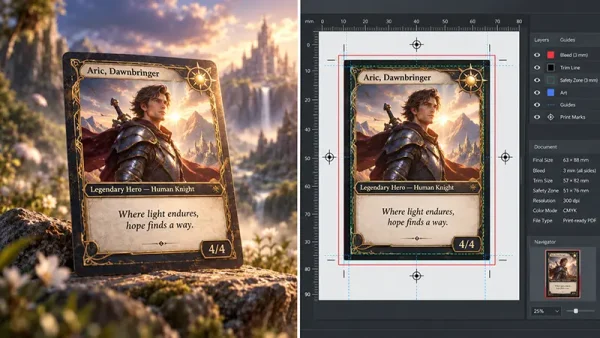
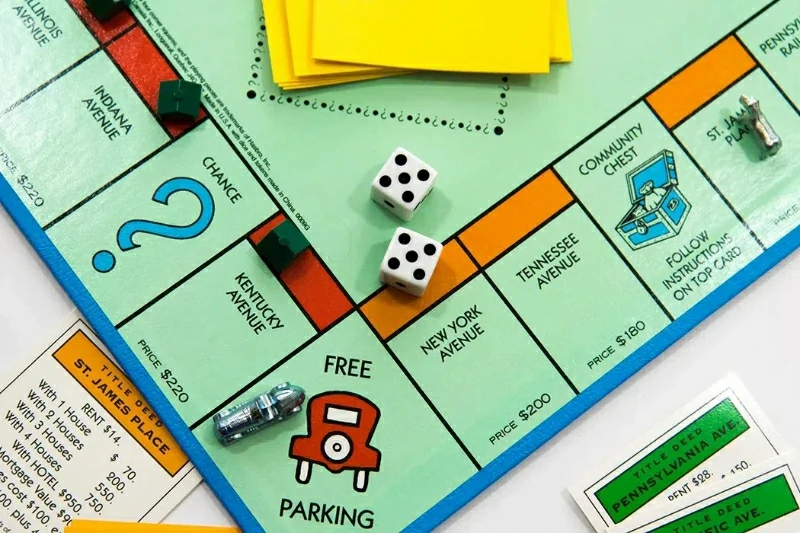
When you think of a traditional card game, whether it’s a classic like Monopoly, Scrabble, or Uno, there’s a sense of nostalgia. These games have been played for generations, passed down through families, and are staples in game night traditions. But as time goes on, the very mechanics that once made them fun can start to feel stale and repetitive. How many times can you land on Boardwalk and pay rent before it loses its thrill? How many Scrabble tiles can you arrange before the challenge fades away?
In the realm of gaming, limited variety can quickly become a pain point. Players who loved the challenge of a traditional game can eventually find themselves yearning for something new. The excitement of playing a game you’ve already mastered diminishes with each round, and the search for new experiences becomes inevitable. But this doesn’t mean you have to put those beloved games on the shelf for good. What if you could create your own game cards, infuse your own creativity, and breathe new life into every playthrough?
The Problem: Repetitive Gameplay
It’s natural for humans to seek novelty. When you first try a game, its rules and the interactions between players are exciting. But as you play it more, familiarity can breed boredom. Imagine playing Monopoly for the hundredth time, and that same “chance” card, or that one inevitable slide into bankruptcy, just doesn’t excite you the way it did when you first started. Traditional games, by nature, offer a fixed set of rules and outcomes. The strategy, although rewarding, can quickly be learned, and what once seemed like a thrilling challenge can soon feel like a simple exercise in repetition.
Even the most cleverly designed games eventually face this fate. Many games are structured around fixed mechanics: roll a die, move a piece, draw a card, and repeat. The skill comes from learning how best to optimize those mechanics, but once you’ve mastered them, the game loses its grip on you. This is a fundamental issue with many long-standing board games and card games—they lack variability.
The Solution: Create Your Own Game Cards
So, how can we break free from the shackles of repetitive gameplay? The answer lies in customization. By embracing the ability to design your own game cards and rules, you can unlock endless possibilities and tap into the wellspring of your own creativity. The process is both freeing and practical, as it allows you to shape a game that never grows stale.
1. Redesigning the Cards
At the core of many traditional games are cards—playing cards, action cards, and event cards. The first step to introducing variety is to start with the cards. Think of the cards as your building blocks, the fundamental pieces that control the flow of the game. By designing your own cards, you can change the game’s rhythm entirely.
For example, let’s take Uno. The standard cards are straightforward—numbered cards, action cards like Skip, Reverse, Draw Two, and Wild. But what if you added new types of cards? Imagine cards that allow you to “Swap hands” with another player, or cards that force everyone to draw one card from the deck when played. Or maybe you could introduce a “Challenge” card that makes players face a mini-puzzle or trivia question before taking their turn. These small tweaks could make the game more dynamic and fun, injecting a level of unpredictability that keeps players on their toes.
Or let’s consider a more complex card game like Magic: The Gathering. What if you could design your own custom decks, complete with unique mechanics and effects? The world of custom cards allows you to tweak card abilities, power levels, and even introduce new types of resources to the game, making it feel entirely fresh, no matter how many times it’s played.

2. Modifying the Rules
Another avenue for creativity is modifying the game’s rules. Many traditional games have a basic structure, but you can introduce house rules that create a completely new experience. This is where your imagination can truly shine.
In Monopoly, for example, you could introduce a new rule where players can trade properties in exchange for special abilities, such as being able to roll two dice instead of one. Or perhaps add a twist where the game speed is determined by the roll of a special “time” die, with certain faces speeding up or slowing down the game’s pace.
In games like Chess or Go, the basic strategies are time-tested, but what if you swapped out traditional pieces for custom ones? Instead of the Knight, players could use a custom “Rogue” piece with unique movement abilities. Or, in Go, instead of just placing black and white stones, you could introduce new types of stones with their own rules for capturing and grouping.
For more complex games like Dungeons & Dragons, the rules for character creation and the adventure itself can be entirely customized. Perhaps your game features a setting where magic works differently or a campaign where the dungeon master (DM) is allowed to draw from a wider range of abilities or monsters than usual. Customizing the rules allows you to constantly reinvent the game, ensuring no two sessions are ever the same.
3. Thematic Customization: Creating a New World
Another exciting way to create variety is through thematic customization. Many games have a fixed setting or story arc, but you can create your own world or narrative that can influence how the game is played.
Let’s look at a game like Clue, where the objective is to figure out who committed the murder, with what weapon, and where. You could easily design a new version of Clue set in a different time period or location—perhaps a futuristic space station, a medieval castle, or a pirate ship. In this version, the weapons could include laser guns, magic wands, or enchanted swords, and the rooms could be redesigned as futuristic laboratories or secret lairs. Customizing the setting changes not just the aesthetic, but the strategic elements of the game as well.
In Dungeons & Dragons, the settings and campaigns are endlessly customizable. Some groups might enjoy campaigns set in high fantasy worlds filled with elves and dragons, while others might opt for a post-apocalyptic setting where players scavenge for resources. Creating new worlds for your games can spark new strategies, characters, and challenges that keep the experience exciting and fresh.

4. Involve Your Players
One of the best parts of customization is that it’s not a solo effort. Involving your players in the creation process can make the game feel even more unique. You might have each player design their own character cards, complete with special abilities or traits. Players can also contribute to rule changes—perhaps one player has a particularly creative way to use an item, while another has a new card idea to introduce.
In games like Settlers of Catan, where resource management plays a major role, you could introduce new resource types, like “magic” or “technological” goods, that impact gameplay. Perhaps certain locations on the board could be customized with extra abilities or hidden treasures.
By making your players part of the design process, you increase investment in the game and make the experience more collaborative and exciting.
Conclusion: Create Your Own Game Cards
When you hit a wall with repetitive gameplay, the best solution isn’t necessarily to move on to another game. It’s to get creative and reinvent the game you’re already playing. By customizing the cards, modifying the rules, and reimagining the setting, you can inject new life into any traditional game, ensuring that it stays fresh, exciting, and endlessly enjoyable. Customization not only revives your interest but also taps into your creative potential, turning every game night into a unique and personal experience.
So the next time you’re looking for something different, remember that the key to unlocking endless variety lies in your own imagination. With just a few tweaks here and there, you can create a world where the possibilities are as limitless as your creativity with Acelion. And that, in the end, is what keeps the magic of card games alive.