

OEM Disclaimer: This page showcases a completed contract manufacturing project produced on behalf of a former client. All artwork, branding, and design elements remain the intellectual property of the original client. This product is not available for retail sale and is presented solely as a portfolio reference for prospective B2B buyers evaluating our production capabilities.
This past project involved the production of a 60-card educational flash card deck engineered for children aged 2 to 6.
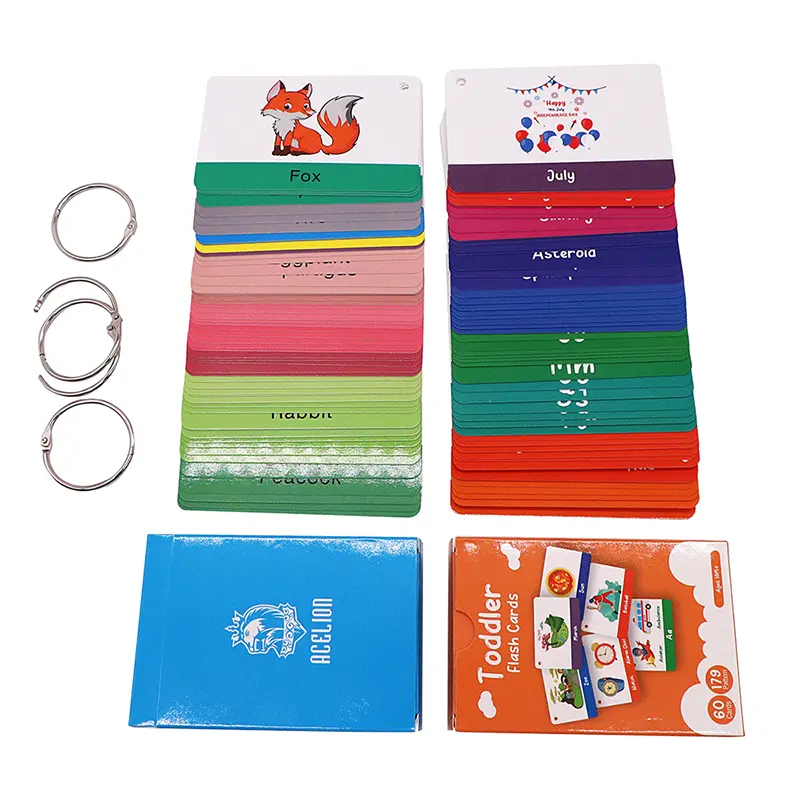
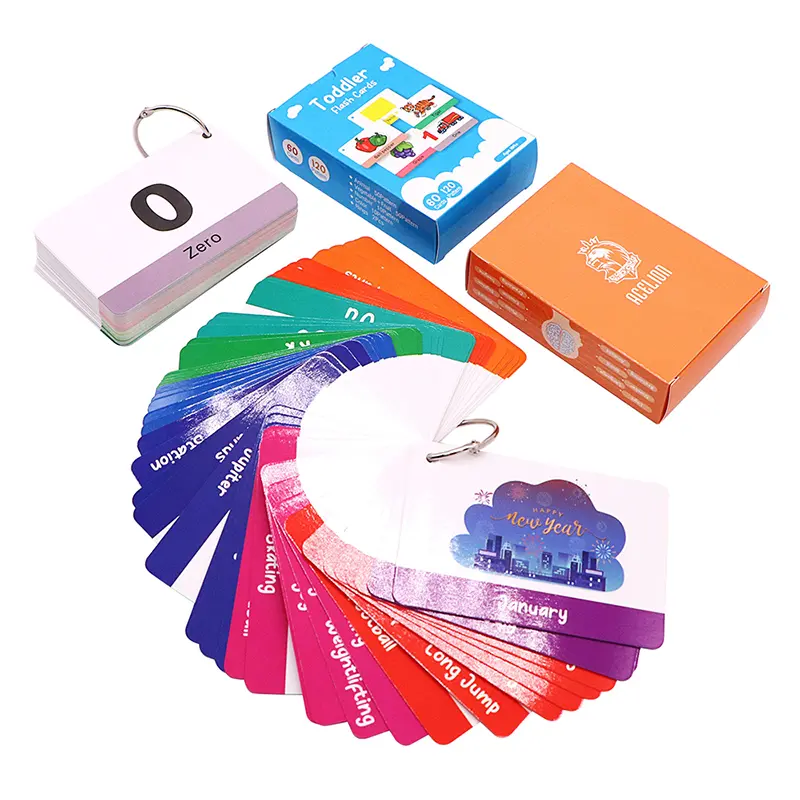
The deck was built around a metal ring binding system for easy card flipping and reordering. A color-coded bar printed along the bottom edge of each card creates a continuous rainbow gradient when the full deck is stacked in sequence — a registration-dependent design feature that drove several key production decisions on this run.
Buyers sourcing a manufacturing partner for similar projects can review our full process capabilities on our custom kids flash card printing service page.

Kids Flash Cards / Gloss Lamination
The primary challenge on this deck was maintaining consistent CMYK color registration across all 60 cards to ensure the bottom-edge rainbow gradient aligned seamlessly when stacked.
That tolerance requirement compounds across a full print run — any color drift between sheets breaks the gradient sequence visually.
A secondary challenge involved calibrating the ring-punch die-cut position precisely enough to clear the gloss lamination edge without delamination, while keeping hole placement consistent across the full 350gsm card stock.
| Parameter | Value |
|---|---|
| Card Size | 70 × 120 mm (2.75 × 4.75 in) |
| Deck Count | 60 Cards |
| Card Material | 350gsm Art Paper |
| Print Method | CMYK Printing |
| Card Finish | Gloss Lamination |
| Binding | Metal Ring Binding |
| Box Type | Custom Tuck Box |
| Box Print | CMYK Printing |
| Box Finish | Matte Lamination |
Each variable in this spec — substrate weight, finish type, and binding format — has a direct impact on press behavior, post-press handling, and end-use durability.
350gsm art paper sits at the practical ceiling for ring-bound card formats.
It provides enough rigidity for small hands to handle individual cards without buckling, while remaining thin enough that a 60-card deck threaded onto a standard metal ring stays manageable in total stack thickness. Going heavier introduces binding tension issues; going lighter compromises the structural rigidity the format requires.
Gloss lamination on the cards was the correct finishing call for this specific design.
The rainbow color-coded bars are a registration-dependent feature — the gradient only reads as intended when colors are saturated and edges are sharp. Gloss lamination seals the CMYK ink layer and amplifies color vibrancy in a way that matte or soft-touch alternatives would visibly suppress.
It also adds a functional layer of surface protection against the repeated handling a children’s learning tool receives.

Custom Tuck Box
Matte lamination on the tuck box creates a deliberate tactile contrast with the cards inside.
From a production standpoint, this pairing also reduces surface scuffing during packaging assembly — gloss-on-gloss contact inside a tuck box tends to show handling marks far more readily than a matte exterior does.

Metal Binding Ring
Metal ring binding is structurally well-suited to the 2–6 age range use case.
Unlike saddle-stitched or perfect-bound formats, a ring-bound deck allows cards to be removed, reordered, and reinserted without damaging the set — a functional requirement that aligns directly with how educators and parents use flash card tools in practice.
Factory Note
The two most unforgiving steps on this deck were ink sequencing and post-lamination punch timing — and both required deliberate deviation from standard shop defaults.
On the color-coded bottom bars, we reversed the standard CMYK ink laydown sequence. Cyan was held as the final pass rather than the first, because on gloss-laminated art paper, laying cyan last preserves its optical density at the card edge where the rainbow gradient is most visually exposed. Running it early causes the subsequent magenta and yellow passes to partially suppress cyan’s saturation — acceptable on most jobs, but not on a registration-dependent gradient that has to read correctly across 60 stacked cards.
On the ring-punch operation, we enforced a minimum 24-hour cure window after gloss lamination before any die-cutting was performed. At 350gsm with a thermal lamination film, the adhesive bond between the film and substrate is still partially plastic within the first few hours. Punching too early causes the film to peel back microscopically at the hole perimeter — not visible to the naked eye at first, but it creates a delamination initiation point that fails after repeated ring flexing in end use. Waiting for full adhesive cure, combined with a freshly sharpened punch die, produced clean hole edges with zero film lift across the full run.
If you’re developing a ring-bound educational card set, a children’s learning kit, or any card product that requires tight color registration and durable lamination finishing — we’re glad to walk through the specs with you.
Request a sample pack from this run or reach out to inquire about this finish combination for your next production order.